
Kengo Kuma: Architecture in dialog with nature

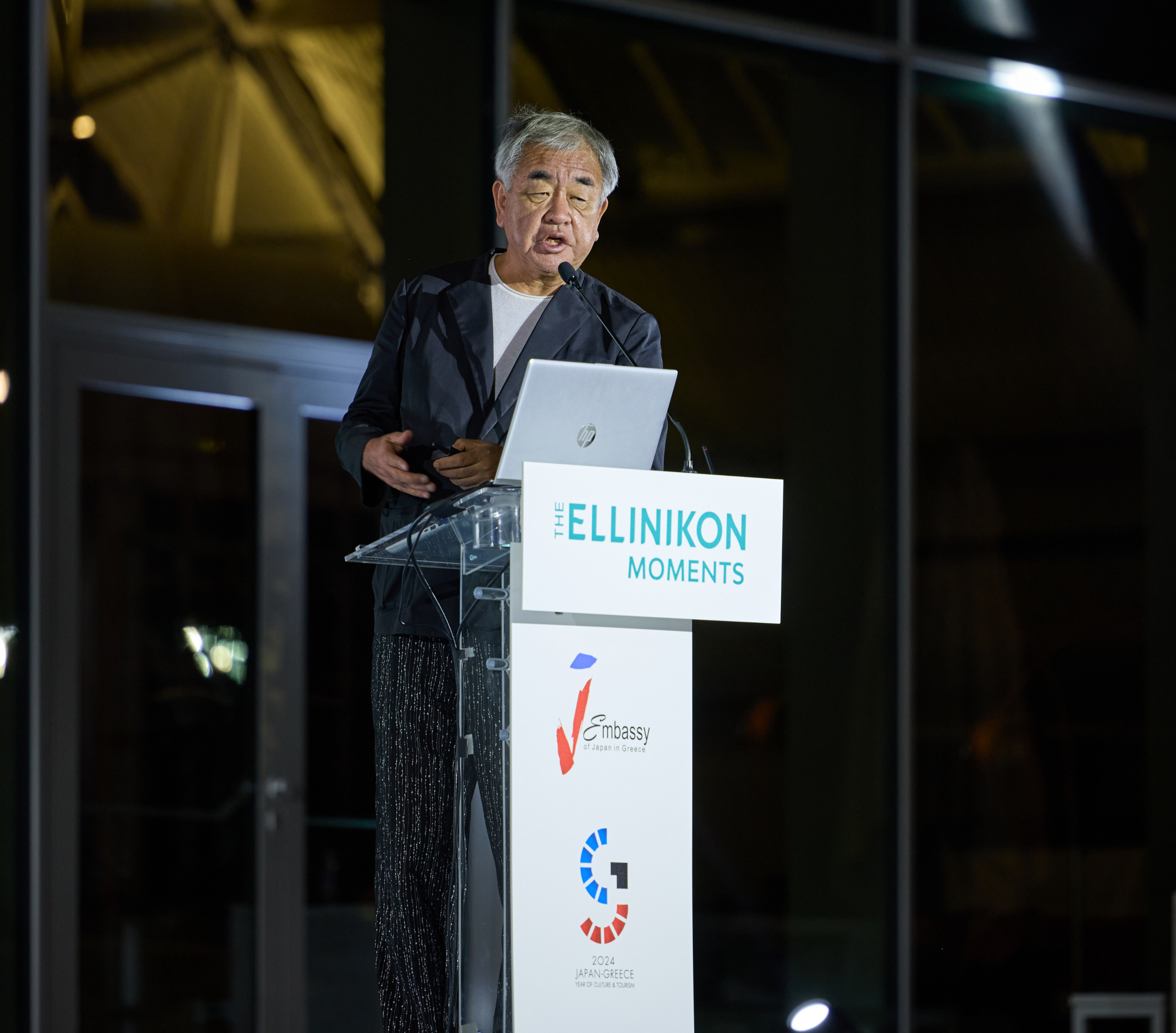
One of the world’s top modern architects and architectural theorists, Kengo Kuma, is creating a new iconic landmark on the Athens Riviera. The man who designed the Japan National Stadium, the main venue for the 2020 Tokyo Olympics, is designing the Riviera Galleria at The Ellinikon.
Founder of the Kengo Kuma & Associates architectural firm, with offices in Tokyo, Beijing, Shanghai and Paris, Kuma has designed buildings of high aesthetic value in more than 20 countries. It is telling that in 2021, TIME magazine included him among its 100 Most Influential People in the World.
Who is Kengo Kuma
Kengo Kuma was born in 1954 in Yokohama, Japan. He grew up in a small, wooden house with soft floors and screens made of translucent paper that allowed light to pass through. In his childhood home, he learned to love simple and kind spaces that hold “rich lives”. He had been dreaming of becoming an architect ever since he was 10, and he later studied Architecture at the University of Tokyo and Columbia University in New York.
From the time he was a student and up to this day, his travels have been his constant source of inspiration. Traveling around the world, he observes how light enters Christian churches, how wood combines with stone in the Balkan countries, how the traditional Japanese roofs with eaves create sheltered walkways.
Today, Kengo Kuma & Associates is behind some of the most iconic structures all over the world: from the innovative V&A Dundee design museum in Scotland and the Haruki Murakami Library in Tokyo, to The Exchange multi-use building in Sydney and the Rolex Tower in Dallas, Texas. Kengo Kuma also teaches at the University of Tokyo, leads research programs in Asia, Europe and America, and has influenced an entire generation of architects through his many books.
Architecture as a matter of relationships
In his book, Anti-Object: The Dissolution and Disintegration of Architecture, Kengo Kuma calls for an “architecture of relations”. For him, buildings are not simply placed in space to dominate it, but become part of it and converse with the natural environment: the light, the landscape, the plants.
To establish this dialog between buildings and nature, Kengo Kuma:
- Chooses local building materials – Locally-sourced timber in wooded areas or local stone in rocky terrains, so the building speaks the language of the area.
- Integrates shapes from the natural landscape – The building surfaces follow a mountain line or the geology of the terrain.
Kengo Kuma believes that modern metropolises are detached from nature: they promote the use of cars over walking, while buildings are made of concrete and use artificial ventilation and air conditioning, losing their harmonious connection to their surroundings. On the contrary, the famous architect designs buildings that blur the lines between the interior and the exterior, ensuring a continuation of the natural experience.
Kengo Kuma interprets the Parthenon
For Kengo Kuma, the most brilliant example of architecture of relations in history is the Parthenon. He does not view it as an isolated masterpiece that stands imposing and alone, but as a structure in constant dialog with the sacred rock of the Acropolis. The structure’s true beauty lies in this precise relationship with the hill.
The temple is made of Pentelic marble, integrating the land geology. The empty space between the columns changes from side to side, allowing the eye to wander freely and grasp the continuation of space inside and outside the monument. Natural lighting and ventilation connect the interior of the temple with the Attica sky, the air and the light, turning the Parthenon into an archetype model of architecture in full harmony with its surroundings.
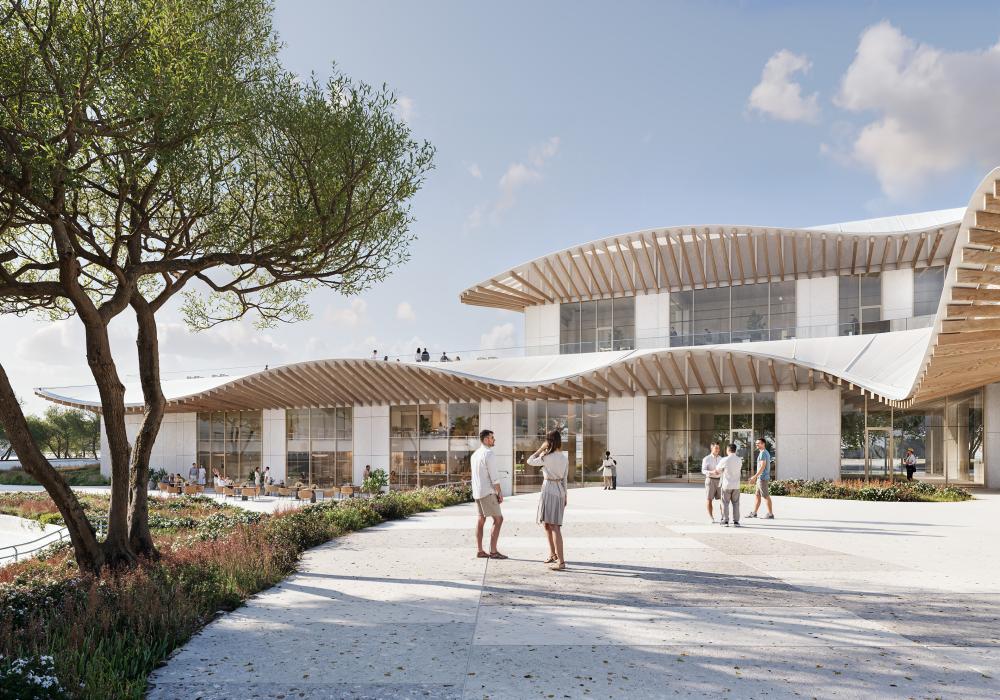
Riviera Galleria: the new landmark along the Athens Riviera
The Riviera Galleria is set to become a premium commercial and culinary destination in a unique area. Top international and Greek fashion brands will welcome visitors from all over the world, while award-winning restaurants, fine bistros and elegant bars will offer gastronomic pleasures, overlooking the marina and the open sea.
Kengo Kuma has envisioned a building complex that is in open dialog with the natural landscape. The Riviera Galleria unfolds in harmony with the coastline, the urban fabric and the green setting of the largest coastal park in Europe. The undulating canopy mirrors the movement of water, translating the rhythm of the Argosaronic Gulf waves into an architectural form. So, the Riviera Galleria appears to be born from the sea, continuing its line, as the natural extension of the landscape.
For the construction, Kuma turned to gentle, natural materials rooted in the Greek landscape, subtly filtering the Mediterranean light. For the canopy, he used wooden beams, which he covered with white fabric that creates soft, natural shading. The wide, shaded walkways create the sense that the complex remains open to the Attica sky, allowing the air and the sea to become part of the experience.