
Micromobility in the modern city

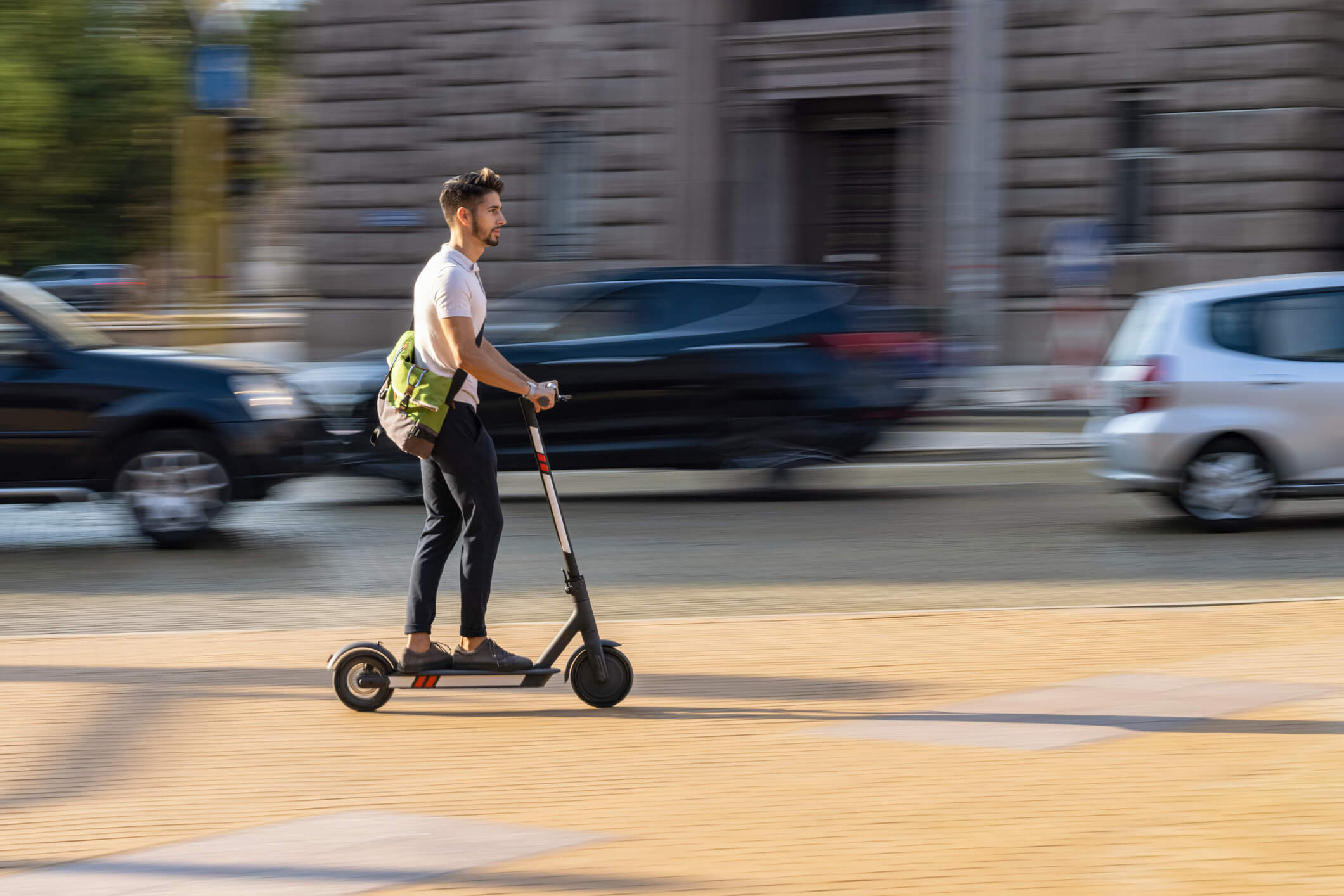
Electric scooters weave past us in traffic, only to be found abandoned on the next corner, bicycles pull up beside us at the traffic lights or join us on the metro, and cars are starting to look more like toys. Micromobility has rapidly become a part of our lives, making our daily commutes faster and more practical, greener and quieter, and much more fun.
Micromobility and sustainable transport
By “micromobility” we refer to short-distance travel within cities using small, lightweight personal vehicles, either privately owned or shared. These vehicles are environmentally friendly, as they are either human-powered or electrically assisted, and do not travel at high speeds. Moreover, they encourage the use of public transport, as they bridge the gap between the public transport stop and the final destination. This way they help relieve traffic congestion.
The most common vehicles are:
- Classic, electric and cargo bikes
- Electric two-wheelers (mopeds with an electric motor)
- Electric scooters
- Electric tricycles
- Microcars or nanocars
Some less common types include electric unicycles, skateboards, roller skates and hoverboards.
Every European Union country has developed its own legislation on micromobility, aiming to improve the quality of urban life and foster sustainable urban mobility. In Greek legislation, for example, Personal Light Electric Vehicles (PLEVs) are regulated. Under the Greek Hughway Code, they’re treated as pedestrians when their maximum speed is 6 km/h and as bicycles when they can travel at speeds between 6 and 25 km/h, while they’re prohibited from traveling on roads with a speed limit exceeding 50 km/h.

Champion cities in Europe
The discussion about sustainable urban transport opened up decades ago on a European level, through initiatives such as POLIS. Established in 1989, POLIS is Europe’s largest network of cities and regions, focusing on exchanging ideas and developing impactful policies for local transportation. However, some European cities began putting the core principles of micromobility into practice much earlier.
The most notable example is that of Amsterdam, which launched the first bike-sharing system in the mid-1960s. This laid the groundwork for launching the OV-fiets bicycle rental service in 2003. The service is now available nationwide, with 22,000 shared bicycles at 300+ locations.
Paris invested in bicycle lanes. In 2007 it started operating Vélib' Métropole, which became one of the largest bike-sharing systems in the world, limiting traffic congestion in the city. In Barcelona, Bicing, the equivalent bike-sharing system, is supported by the superilles, which are large, low-traffic city blocks designed around green space and sustainability.
Micromobility in Greek cities
The first initiatives to promote micromobility in Greece came relativey late, with the introduction of electric scooters in 2018. In recent years, however, significant steps have been taken in various cities across the country to create infrastructure that supports micromobility.
Trikala is a pioneer in the smart city approach and is considered one of the most bicycle-friendly cities in Greece. It has 3 main bicycle lanes and an automated bike-sharing system. EasyBike is a system operated by the municipality, allowing residents and visitors to easily find an available bike using their mobile phone.
Thessaloniki has also made significant strides in the field of micromobility. The municipality participates in European programs to develop innovative platforms for parking and charging electric scooters, and to improve road safety.
As far as the Greek capital is concerned, the use of both bicycles and electric scooters has increased in recent years, particularly in the city center. Infrastructure in Athens is being developed gradually. The construction of new bicycle lanes and the redevelopment of the beach front are expected to favor the use of bicycles and other low-impact modes of transport.
At Τhe Ellinikon on foot or by bike
At The Ellinikon, an extensive 50 km network of routes is being created, including pedestrian paths, bicycle lanes and low-speed traffic roads. The new 15-minute city is being designed to reduce the need for car use, as all destinations, from shops and offices to schools and hospitals, will be accessible within 15 minutes on foot or by bike from the center of the park.
State-of-the-art infrastructure supporting and promoting micromobility, such as conventional and electric bikes, accessible through the Ellinikon App, will facilitate low-impact mobility.
Lastly, the 800-meter-long and 12-meter-wide waterfront promenade will offer one of the park’s most scenic walks for residents and visitors.