
Urban green spaces for more resilient cities

Today, more than 50% of the world population lives in cities, a percentage that is expected to reach nearly 70% by 2050. A large part of the urban areas that will exist in 2030 have not been built yet. This is why it’s critical to seize the opportunity we have to create a sustainable urban environment, with green infrastructure and a strong focus on resilience.
At the same time, though, we need interventions in the cities we already live in, to address the pressures of modern life and the challenges of climate change. Large and small parks, green islands and rooftops, as well as gardens in courtyards and shared spaces, are the injections of green that the urban landscape needs to offer a better quality of life to its current and future residents.
Improving quality of life in the urban fabric
It is easy to observe the benefits of green spaces in our daily life, first of all when it comes to our mood. This empirical observation is confirmed by numerous studies that highlight the human need to be in contact with nature. Access to urban green spaces improves our mental and physical health by lowering stress levels, even having a positive effect on blood pressure. Parks offer opportunities for social interaction and exercise for people of all ages, while a communal garden can become the heart of a neighborhood, enhancing social cohesion.
Green spaces also have a positive impact on a city’s micro-climate. The average city temperature may be 1-3οC higher compared to the average temperature in surrounding rural areas, due to the urban heat island effect. Urban vegetation lowers temperatures, improves air quality and limits the risk of flooding after intense rainfall. And, of course, it creates small biodiversity shelters within the urban fabric for insects, birds and a number of plant species.
Green infrastructure and circular economy
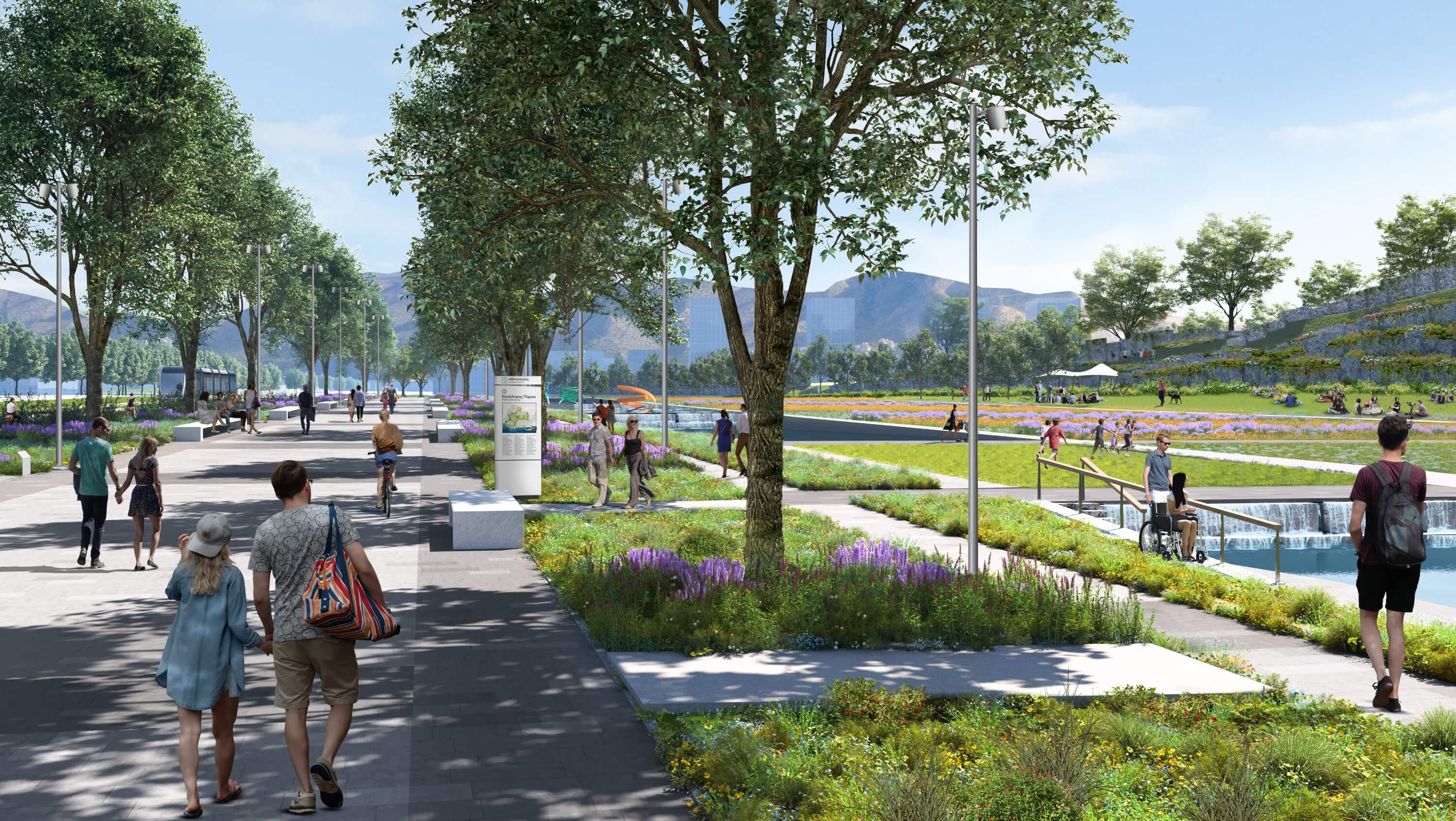
Cities around the world are increasingly recognizing the need to integrate green infrastructure into their urban planning, especially through regeneration projects. However, even small-scale interventions can have a strong impact when they are cumulative. Pocket parks transform abandoned spaces into small urban oases, breathing new life into densely populated neighborhoods. Tree-planted islands reshape the appearance of roads and can even be turned into pedestrian pathways. But even the city dwellers themselves can make cities greener: shared gardens in apartment building courtyards, green rooftops and even a few potted plants can make a difference.
When we talk about green spaces, we should not forget that their care requires water resources. Proper water management is very important, especially in Mediterranean cities that are typified by higher temperatures and less rainfall. The right choice of plants suited to the local climate reduces the need for water, while the design of suitable rainwater harvesting systems turns circularity into action and green space maintenance becomes sustainable.
Urban parks in Europe and Athens
Urban parks are the green lungs of modern metropolitan areas. Yet they are far from a modern idea. Their value had already been recognized as early as the 16th century. The Alameda de Hércules Park in Seville is considered the oldest established urban park, and a source of attraction and entertainment for people of all ages to this day. And similar examples can be found in most European cities. Our neighboring Venice may be famous for its canals, but is also home to the beautiful Giardini della Biennale, which hosts the renowned art exhibition. The famous Hyde Park in London, spanning 1,400,000 sq.m., welcomes millions of visitors every year.
Attica, too, has its own green gems. The National Garden is an exceptional sample of 19th-century landscaping. In an area of 156,000 sq.m. in the heart of Athens, it features a variety of flowering plants, a network of winding paths and a strong water element. The beautiful Attica Grove, spanning 474,000 sq.m., shared among the municipalities of Athens and Galatsi, is a peri-urban forest of significant ecological value, the result of the restoration of abandoned quarries in the area.
LAMDA Development: Transforming city life
At LAMDA Development, we are transforming the urban landscape and the way people live, work and relax, creating sustainable, modern destinations that upgrade day-to-day life.
The Ellinikon is part of the natural beauty of the Athens Riviera. It was designed to be inspiring and inviting, open and accessible to all. This modern urban area will come alive through the people who live or work there, or visit it to take a walk, exercise, shop or enjoy other entertainment.
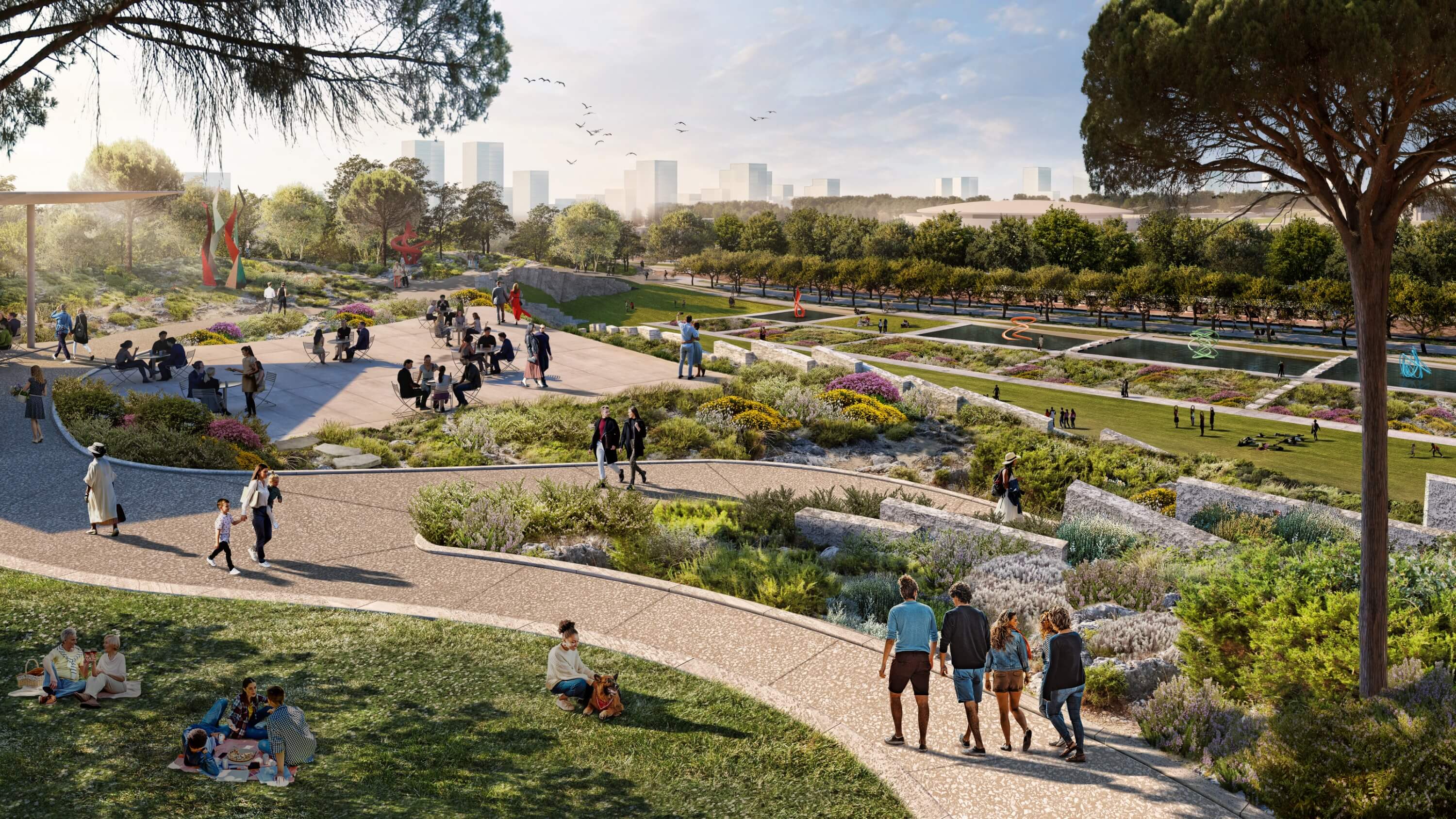
At the heart of The Ellinikon lies The Ellinikon Park that will breathe new life into the entire Athens metropolis, covering 1/3 of the new city when it is completed. The largest coastal park in the Mediterranean, spanning 2 million sq.m, will be 12.5 times larger than the National Garden of Athens and 1.5 times larger than Hyde Park. It is poised to become a model of sustainable development, reconnecting the city with the sea, and the residents with nature, art and cultural heritage.
The visitors of The Ellinikon Park will have a chance to discover the Cultural Route, a 12-km walk that will showcase the rich history of the Ellinikon area through 15 monuments and findings from the classical and modern era. The old East Terminal central building of Ellinikon Airport, the gateway to Athens for many decades, will be prominent along the route. The building, which was designed by renowned Finnish architect Eero Saarinen in 1960, combines 20th century architecture with the Greek spirit and is listed as a Modern Monument by the Ministry of Culture.
At the same time, at LAMDA Development we play our part in developing urban green spaces beyond the limits of The Ellinikon Park. Through the Urban Green Dots initiative, we are making neighborhoods greener and giving new life to abandoned public green spaces. This way we improve the everyday quality of life of the residents and demonstrate in action our commitment towards a better, more sustainable future.