
Digital detox: less screen, more city

When was the last time you went for a stroll around the city without glancing at your mobile phone even once? The last time you went out for coffee or a meal with friends and there wasn't a single device on the table? For most people, the answer doesn't come easy.
In a world designed to capture our attention, digital detox has started to feel like a small act of freedom. You don't need to withdraw completely from the digital reality. What you can do, however, is adopt small habits that will not only bring you closer to yourself, but also to others.
Limits, not abstinence
The point is not to live without your phone or demonize it. It's about deciding when to use it, rather than letting it decide for you. And all it takes for that are a few simple, intentional choices.
Around the world, the trend is already moving in this direction. More and more artists are asking the audience to lock their mobile phones in special cases until the end of the concert or performance. In cities like London and New York, device-free cafés are opening and evenings are being organized, with people leaving their devices at the door. Even quite a few Gen Zers are turning to basic mobile phones to take a break from social media.
Setting limits on the use of technology can fit easily into your daily life, and the result might surprise you. On a walk through the city, with no notifications competing for your attention, your gaze drifts back to the streets, to the people, to the details you usually overlook. A meal where the phone stays in your bag instead of sitting next to your plate isn't just a matter of good manners. It's a simple way to truly enjoy the company of the people sitting across from you.
The same goes for time spent in nature, in a park or by the sea, without feeling the need to capture every moment. In Japan, in fact, simply spending time among the trees, taking in your surroundings with all your senses, even has its own name: shinrin-yoku or "forest bathing". You don't need a forest to try it. You just need to put the screen aside for a little while.

The return of the group
In recent years, human contact and communication have shifted, to a large extent, to our mobile phones. Messages, stories and video calls have taken the place of physical presence. Today, however, something seems to be changing.
In many cities around the world, more and more people are looking for reasons to go out and meet others in person, without screens getting in the way. Running clubs are a case in point. Groups of runners meet up every week, run a few miles and end up grabbing a coffee or a beer. For many, running is just the excuse. The real reason is the company.
Supper clubs, which bring strangers together around the same table, follow the same idea, as do book clubs, game nights, and small workshops. At the same time, the old habit of heading out with no plans and no schedule is making a comeback. So are the familiar spots where you know you'll run into friends and the simple "I'm here, come join me."
As early as the late 1980s, sociologist Ray Oldenburg spoke of "third places" – spaces between home and work where people meet without any particular reason. Today, these spaces – from the neighborhood café to the bench in the square – are once again becoming the center of a more spontaneous and authentic social life.
On foot, no rush
At a time when everything moves fast and wellness brings to mind gym memberships and apps that track your every move, walking has almost become part of counterculture. Many people are rediscovering it, not as exercise with goals and performance metrics, but as an everyday pleasure.
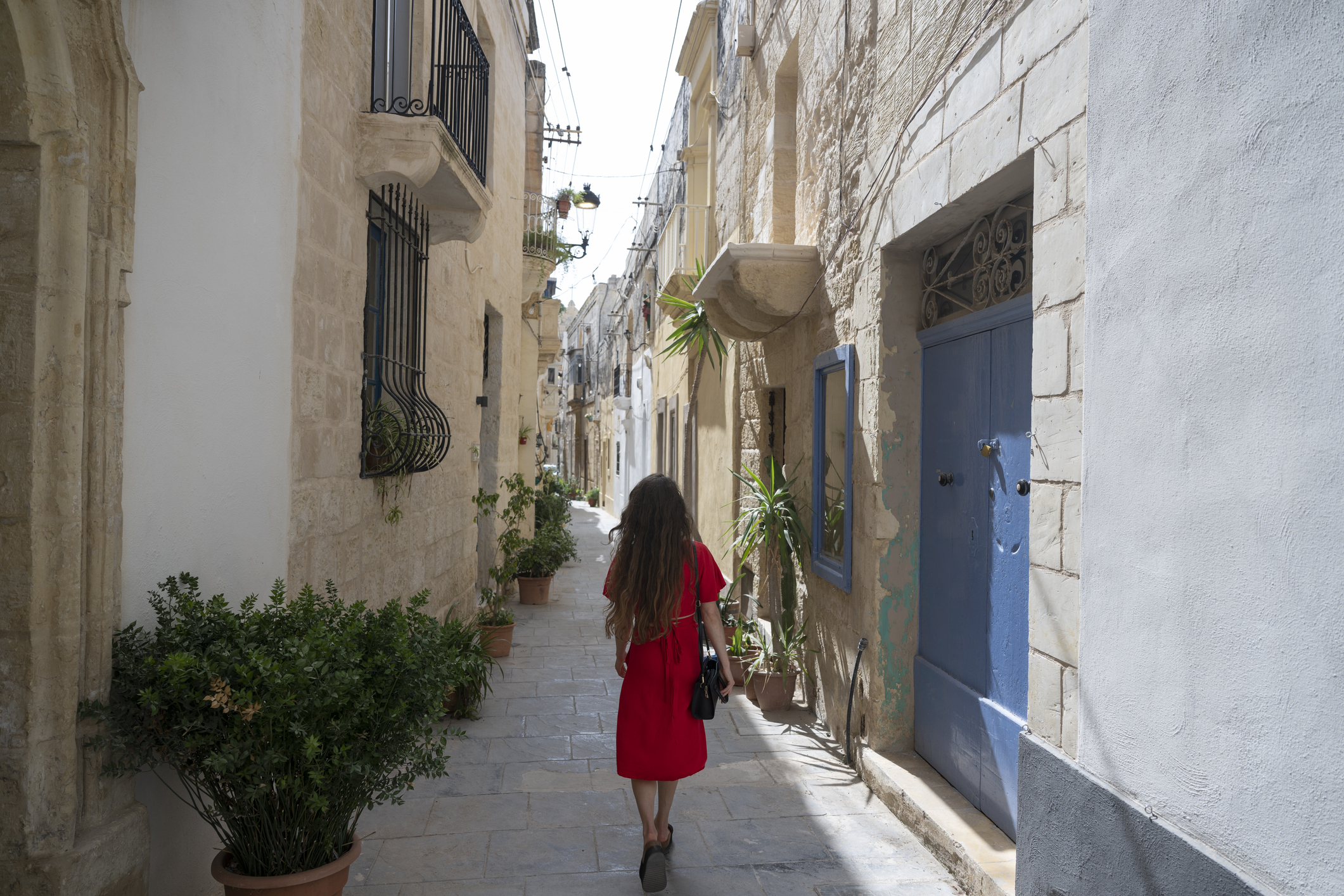
The idea isn't new. In 19th-century Paris, poet Charles Baudelaire wrote about the flâneur, a stroller who wanders through the city without any sense of urgency, simply to observe life as it unfolds on the streets. It was a way to get to know the world. The present-day flâneur does something similar. They leave the phone in their pocket and look around; a balcony full of flowerpots, an old sign, a narrow street they had never explored.
Moreover, walking gives you time to think. Researchers from Stanford University have shown that people think more creatively when walking than when sitting – something that many writers and philosophers already knew by instinct. So, when walking becomes an act of reflection and observation, it is not time wasted, but rather one of the simplest ways to truly experience the city.

Where the city meets the sea
What the world's big cities describe as new trends, Athens has known all along. Here, the neighborhood square has always been a meeting place, coffee an excuse for conversation, and a stroll never needed an excuse at all. With a mild climate and sunshine almost year-round, much of life is lived outdoors.
Athens also rewards those who walk through it. From the Dionysiou Areopagitou pedestrian walk and the Philopappos Hill paths to the narrow streets of Plaka, every route holds something worth noticing. And as you head further south, the city opens up to the sea, and the coastal front becomes one of the most beloved spots for a stroll.
At Ellinikon, one of Europe's largest coastal parks is taking shape: The Ellinikon Park will add approximately 2 million square meters of green space by the water. A place to walk, meet, and rediscover your own pace, away from screens.